The iBook G4: a machine that waited
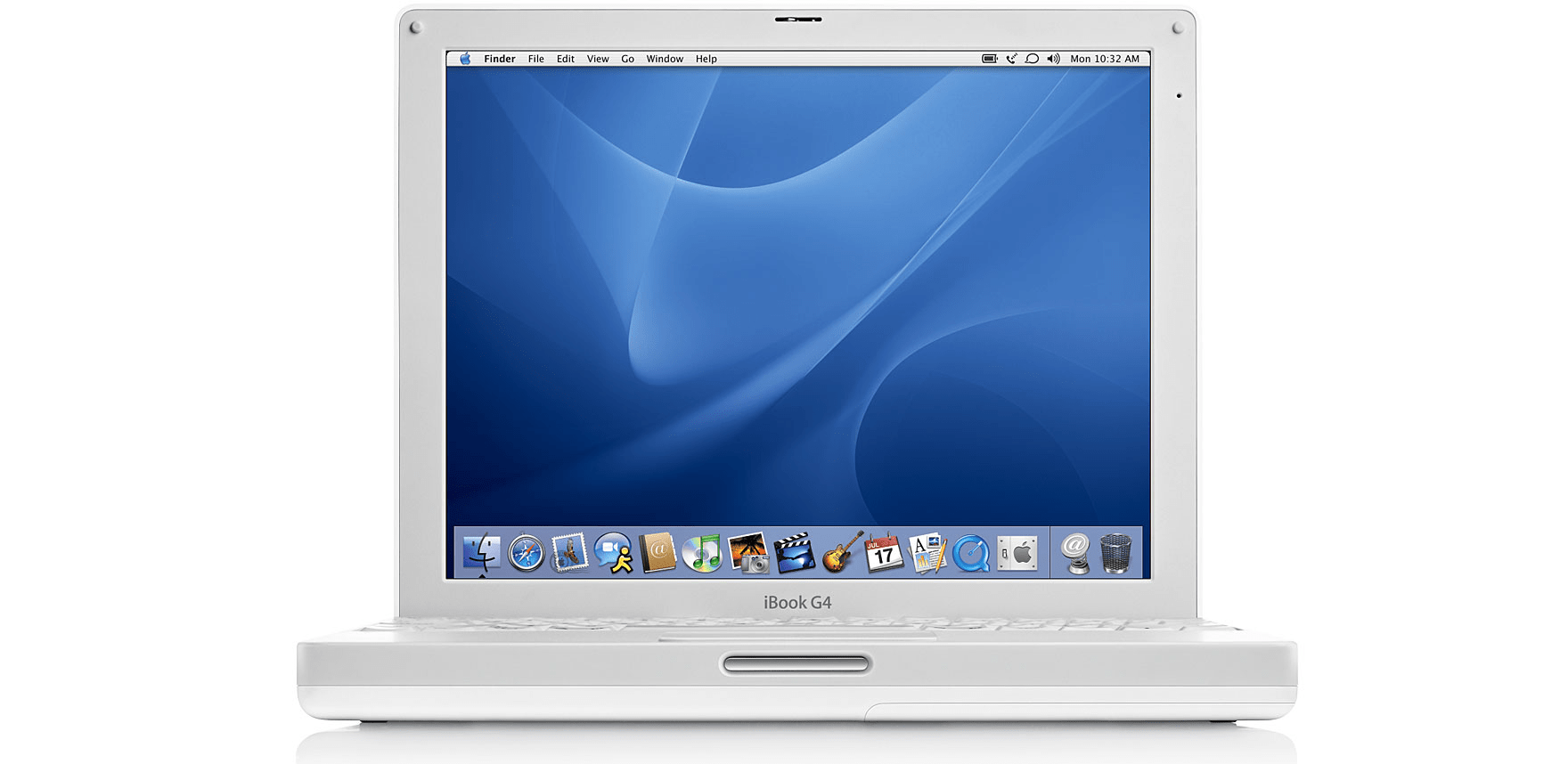
I first held it in 2006. The 12‑inch launched mid‑2005 iBook G4, last of its line, rested lightly in my hands, a compact chassis containing more computing power than I had yet known how to wield. The 1.33 GHz PowerPC G4 CPU, 512 MB of RAM, and a 40 GB PATA hard disk formed a coherent, legible system. The optical drive added weight and inertia, but it was integral to the machine’s mechanical logic. Each component defined both capacity and constraint.
Opening the cover for the first time, I noted the click of the latch, and the keyboard’s slight flex. The device felt solid, yet responsive, an instrument capable of carrying my notes, music, photographs, and small software worlds. iTunes, Aperture, and the games of the era loaded within the limits of its PowerPC architecture. Power was tangible, measurable in cycles and cache lines.
Completeness of design
What distinguished the iBook G4 was the coherence of its design. Hardware and software arrived as a single, integrated system: CPU, RAM, storage, I/O ports, display, and OS X were aligned in purpose and behavior. USB 2.0, FireWire, Ethernet and AirPort provided a complete connectivity stack; networking and peripheral interfaces were consistent, reliable, and predictable. OS X managed memory and scheduling efficiently on the PowerPC G4, and the display rendered color and detail with clarity. From iLife applications to basic file management, the system behaved as a unified instrument rather than a collection of parts.
Its significance was never in raw performance metrics or benchmark scores. The machine offered a sense of agency: sitting at the desk, opening the lid, the system responded as expected. Tasks loaded promptly, workflows remained legible, and creative tools were accessible. Even years later, powering it on restores the same perception: a machine designed to support attention, creation, and exploration, rather than to merely execute instructions.
The iBook served as a container for work and attention from 2006 to 2012: notes, iPod management, photo catalogs, retro games. Its PowerPC G4 architecture required an understanding of latency, memory usage, and instruction ordering. The 40 GB hard drive imposed visible constraints: seek times, rotational delays, and transfer bandwidth determined interaction speed. What was once ample now felt restrictive.
Time locked in storage
By the time I last used this machine, 2012, based on file access times, its storage space was frozen in time. The operating system, software versions, and applications were fixed snapshots of an earlier digital life: Aperture at its PowerPC peak, iTunes catalogues frozen, retro games constrained to the binaries of that era. Updates were bounded by architecture; nothing beyond the last supported versions could run. The machine had become a time capsule, preserving a coherent, self-contained environment, but one incapable of interacting with the evolving ecosystem outside it.
At the beginning of 2026, I undertook a careful revival. I upgraded the system to the latest macOS supported on this hardware. Applications were updated to their final PowerPC-compatible versions. The original 40 GB HDD was replaced with a 256 GB mSATA SSD using a PATA adapter, dramatically reducing access latency. A 1 GB RAM module was added, bringing total system memory to 1.5 GB, improving Aperture’s responsiveness and allowing older games to run without stalls. A Bluetooth module was already integrated, while the internal optical drive was removed to save approximately 300 grams. The machine’s environment was no longer frozen: time was unlocked, yet the architecture remained legible.
The original hard disk will be stored carefully. It contains the traces of my early work: notes, projects, game saves, music, and photographs, a snapshot of digital life mediated by mechanical storage. It is an archive, a record of system behavior under constrained resources.
Returning to the iBook now, the effects of the upgrades are immediately observable. Aperture opens predictably; iTunes enumerates libraries without delay; retro games respond consistently. The PowerPC G4 CPU exhibits the familiar in-order execution and AltiVec vector unit behavior, now accentuated by the SSD’s reduced I/O latency. Memory accesses, previously bottlenecked by limited RAM and disk speed, are smoother; swap activity is minimized. The system’s instruction pipeline, cache utilization, and bus behavior are legible in ways obscured by modern, out-of-order architectures.
One unexpected moment during the revival was visual rather than mechanical. Opening the Applications folder and seeing the icons for Skype, Twitterrific, Vuze, ICQ, and ShakesPeer, most of their backends long since shut down, produced an emotional response I hadn’t anticipated. These were not merely programs but portals to protocols, communities, and habits that no longer exist in any functional sense. The icons persist, perfectly rendered, patiently inert, representing networks that once felt permanent. For a moment, the machine displayed not just old software, but the assumption of continuity that defined that era of computing: that services would endure, that addresses would resolve, that presence implied reachability. The contrast between their visual immediacy and their operational silence was quietly overwhelming, a reminder that while hardware can be preserved and architectures revived, much of the networked world they interfaced with has already dissolved.
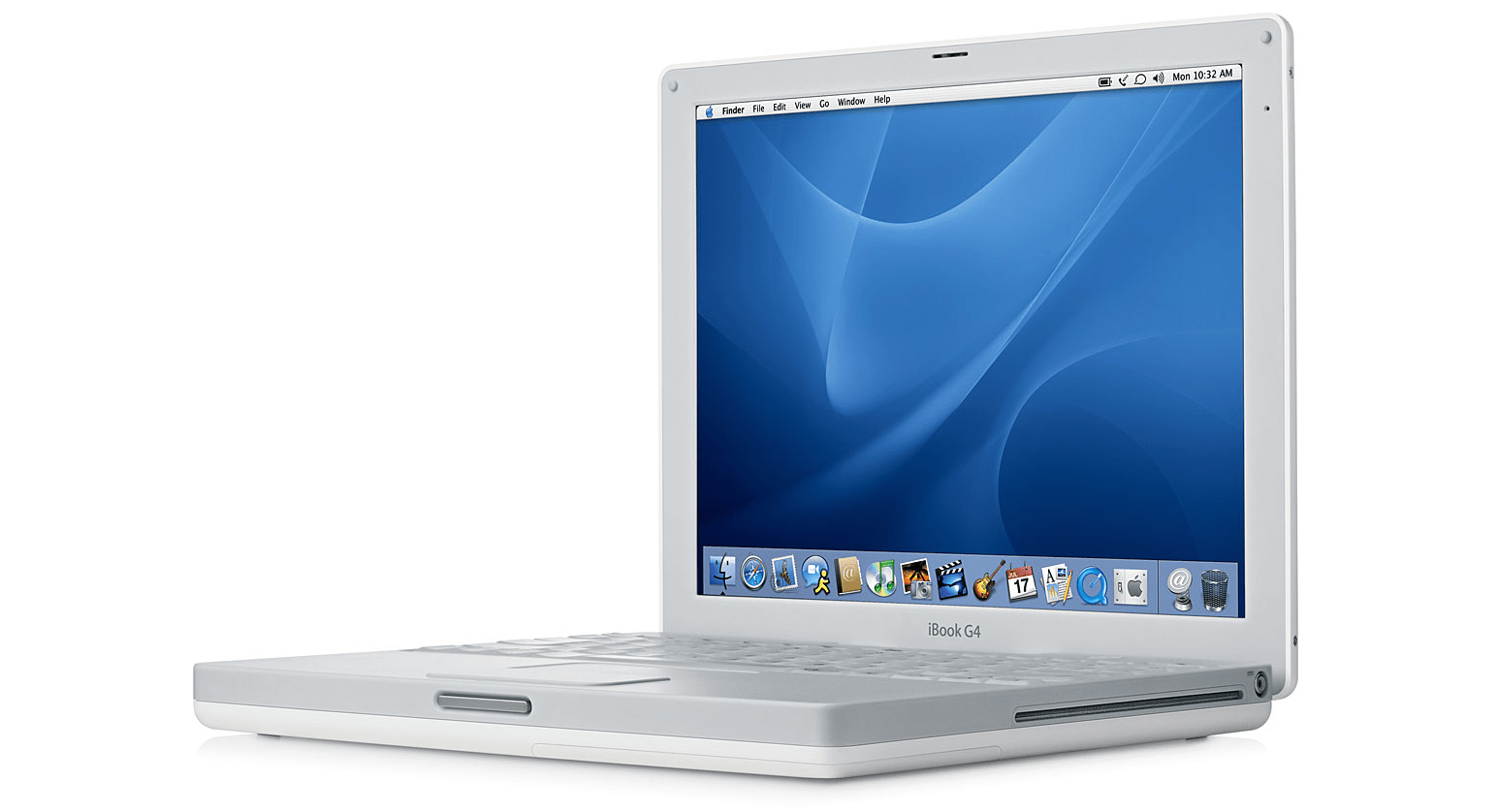
Hard Disk, SSD, and PowerPC behavior
The original 40 GB hard disk was mechanically deterministic. Seek time, rotational latency, and sequential transfer rates defined the rhythm of work. Delays were structural, not arbitrary: each operation reflected physical limitations.
The 256 GB mSATA SSD eliminates most of that mechanical latency. Random access latency drops from milliseconds to microseconds. Throughput increases, and swap activity is reduced. The PowerPC G4 CPU now interacts with storage in a regime closer to cache-bound memory, exposing the architecture’s inherent pipeline and vector behavior rather than masking it behind mechanical delay.
PowerPC G4 behavior remains predictable: in-order execution, explicit caching, and deterministic memory ordering. Performance gains with the SSD reveal architectural rhythm: instruction scheduling, memory alignment, and AltiVec operations become more perceptible. The machine communicates its constraints, now in a faster, yet still legible, tempo.
Together, storage and CPU define the instrument. One accelerates, the other structures. Each cycle, each read, each write is a conversation between components, and the user learns to interpret it.
In 2026, an iBook G4 isn’t about replacing a modern computer, it’s about purpose. Used intentionally, it becomes a quiet, capable little machine for writing, learning, creating, and exploring without the constant pull of the modern Internet.